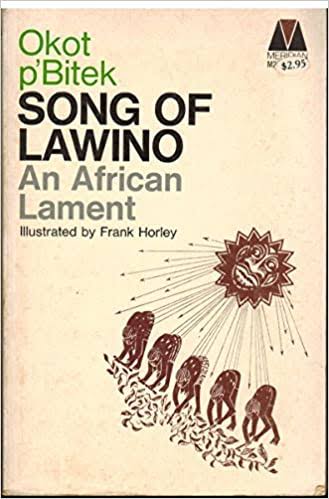
Song of Lawino is an epic poem written by Ugandan poet Okot p’Bitek. First published in 1966 in AcholiLuo, it was quickly translated into other languages, including English. Song of Lawino has become one of the most widely read literary works originating from Sub-Saharan Africa. It has also become culturally iconic within Africa, because of its scathing display of how African society was being destroyed by the colonization of Africa
The narrator in this novel is Azaro, an abiku, a spirit child, who in the Yoruba tradition of Nigeria exists between life and death. The life he foresees for himself and the tale he tells is full of sadness and tragedy, but inexplicably he is born with a smile on his face. Nearly called back to the land of the dead, he is resurrected. But in their efforts to save their child, Azaro’s loving parents are made destitute. The tension between the land of the living, with its violence and political struggles, and the temptations of the carefree kingdom of the spirits propels this latter-day Lazarus’s story.
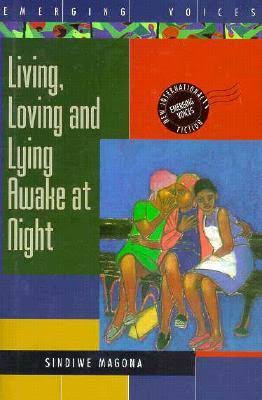
A first book of short stories from this writer, exploring the range of female experiences in South Africa, from the village to the towmships, and whose tone ranges from humour to tragedy.
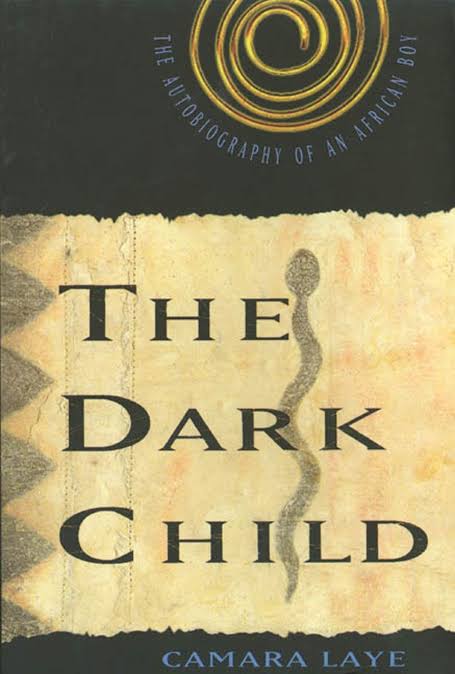
Long regarded as Africa’s preeminent Francophone novelist, Laye (1928-1980) herein marvels over his mother’s supernatural powers, his father’s distinction as the village goldsmith, and his own passage into manhood, which is marked by animistic beliefs and bloody rituals of primeval origin. Eventually, he must choose between this unique place and the academic success that lures him to distant cities. More than an autobiography of one boy, this is the universal story of sacred traditions struggling against the encroachment of a modern world.
A passionate and deeply affecting record, The Dark Child is a classic of African literature.
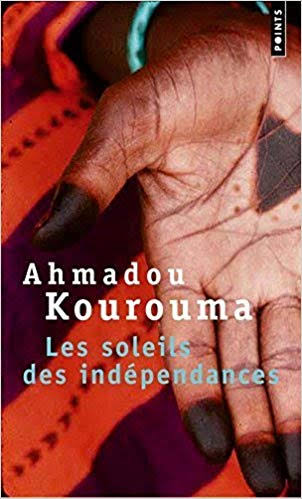
What will be the fate of Fama, authentic Prince Malinké, in times of independence and the single party? The old and the new confront each other in a duel that is both tragic and derisory as history goes by, with its procession of joys and sufferings. Beyond the political fable, Ahmadou Kourouma restores like no other the whole depth of African life, mixing everyday life and myth in a language reinvented as close as possible to the human condition. Since its publication in 1970, this book has established itself as one of the great classics of African literature.
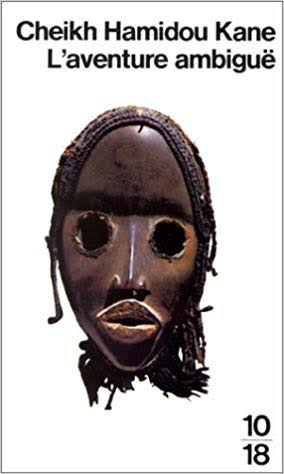
L’Aventure ambiguë is a novel by Senegalese author Cheikh Hamidou Kane, first published in 1961, about the interactions of western and African cultures. Its hero is a boy from the Diallobé region of Senegal who goes to study in France. There, he loses touch with his Islamic faith and his Senegalese roots
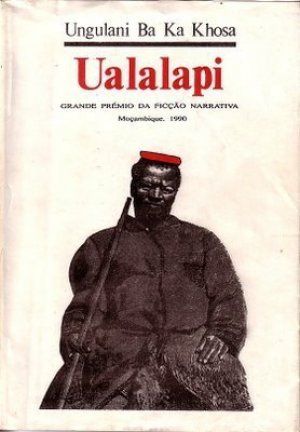
Ungulani Ba Ka Khosa first published Ualalapi: Fragments from the End of Empire in Portuguese in 1987. Named one of Africa’s hundred best books of the twentieth century, it reflects on Mozambique’s past and present through interconnected narratives related to the last ruler of the Gaza Empire, Ngungunhane. Defeated by the Portuguese in 1895, Ngungunhane was reclaimed for propaganda purposes by Mozambique’s post-independence government as a national and nationalist hero. The regime celebrated his resistance to the colonial occupation of southern Mozambique as a precursor to the twentieth-century struggle for independence. In Ualalapi, Ungulani challenges that ideological celebration and portrays Ngungunhane as a despot, highlighting the violence and tyranny that were hallmarks of the Gaza Empire. This fresh look at the history of late nineteenth-century southeast Africa provides a prism through which to examine the machinations of those in power in Mozambique during the 1980s.
This is the moving story of the unforgettable Rosa Burger, a young woman from South Africa cast in the mold of a revolutionary tradition. Rosa tries to uphold her heritage handed on by martyred parents while still carving out a sense of self. Although it is wholly of today, Burger’s Daughter can be compared to those 19th century Russian classics that make a certain time and place come alive, and yet stand as universal celebrations of the human spirit. Nadine Gordimer, winner of the 1991 Nobel Prize in Literature, was born and lives in South Africa.
 African Series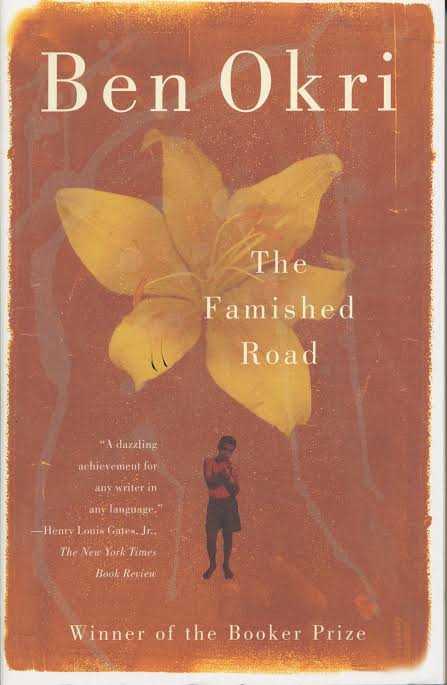

 African Series