Categories
Most Popular Nigeria

The History of The Yorubas

First published in 1921, and cited on the Africa’s Best 100 Books List, this is a standard work on the history of theYorubas from the earliest times to the beginning of the British Protectorate. The first part of the book discusses the people, their country and language, religion, government, land law, manners and customs. The second part is divided into four periods, dealing first with mytheological kings and deified heroes; with the growth, prosperity and oppression of the Yoruba people; the time of revolutionary wars and disruption; and, finally, the arrest of disintegration, inter-tribal wars, and the coming of the British. There are two appendices, on dealing with treaties and agreements, the other giving tables of Yoruba kings, rulers, and chiefs. The book also includes an index and map of the Yoruba country.
Categories
Benin Most Popular

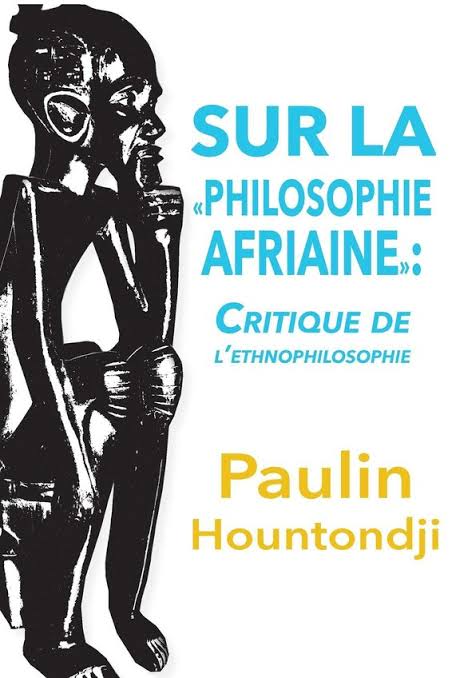
Sur la Philosophie Africaine

Many contemporary African writers remain trapped in the quest for a worldview, philosophy, supposing a single “African” demesne to explain the entire continent, referring to a mythical past. 
Paulin Hountondji shows how these strange conceptual constructions have played a positive role in the resistance led by intellectuals of colonial rule: they responded to the negation of the oppression that it comprised of, but it was an ambiguous answer, especially because it was built on the principles derived from the works of European ethnologists, particularly the Père Tempels. 
Independence opened a new historical period; 
these philosophical elaborations changed direction: once an expression of anti-colonial resistance, they are nowadays an ideology that justifies and reinforces the dominance of the contemporary state; 
the intellectuals who create them are today only the “griots” of the regimes in place. 
Analyzing without complacency the work of Nkrumah, of the Cameroonian Towa, and of the Rwandan Kagamé, amongst others, Hountondji exposes and denounces this antagonism. 
To him, the critical project proposed in this book seems a necessary step on the way to “the liberation of theoretical creativity,” the peoples of Africa and their full participation in the universal intellectual debate!
Categories
Ghana Most Popular

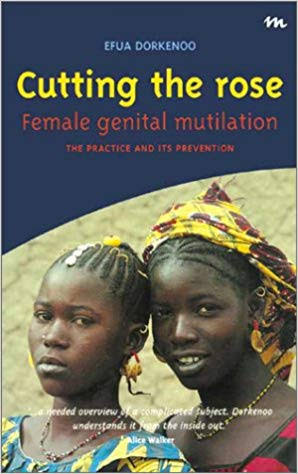
Cutting The Rose

There is growing international interest in Female Genital Mutilation. This is partly due to the exposure of the subject by human rights activists and organizations and partly due to the emergence of the practice in the West.
Given that Female Genital Mutilation has a negative effect on both the physical and psychological health of millions of women, not just in Africa but also in Europe, North America and other parts of the world, what must be done to eradicate this practice? What are the lessons to be learned from past experience of work in this area? How can international interest be guided towards positive change?
In order to answer these questions, Efua Dorkenoo presents the facts about Female Genital Mutilation. From her research in the field and her work in Britain, she then gives a comprehensive update on work in Africa together with models of good practice to show how best to deal with the very diverse experiences found in different parts of the world. Only from such models is it fully possible to explore such issues as the rights of women and of children, of the part which the well-being of women plays in the health of a nation, and also the strengths and weaknesses of the various international campaigns on the subject.
By offering much new information and clarifying many grey areas, Efua Dorkenoo shows the importance of offering professional advice which is prolonged, well-monitored and co-ordinated. This, in turn, should be supported with practical help, which is underpinned by the aid of local and international bodies.
Categories
Most Popular Senegal

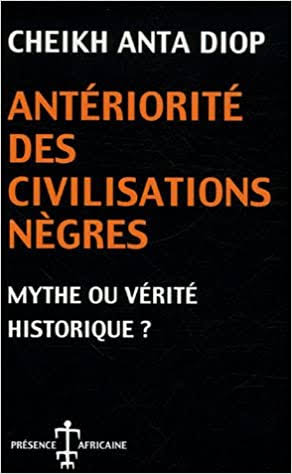
African Origins Of Civilizations: Myth or Reality?

Diop’s book, Anteriorite des civilizations negres, have profoundly influenced thinking about Africa around the world. It was largely because of it that, at the World Festival of the Arts held in Dakar in 1966, Dr. Diop shared with the late W. E. B. DuBois an award as the writer who had exerted the greatest influence on Negro thought in the 20th century.
Categories
Kenya Most Popular

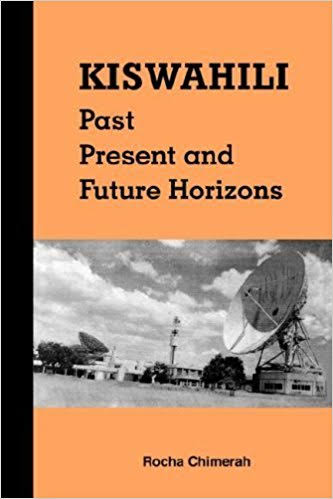
Kiswahili, Past, Present and Future Horizons

Kiswahili is the fastest growing African language. The author, Professor of Kiswahili at Egerton University, here describes this growth and examines Kiswahili as an alternative to European languages in East Africa and as an international language for Africa. He covers the controversial theories of the origination and development of Kiswahili, the effects of the use of English as the language of instruction in Kenya and the status of Kiswahili in trade, religion and politics in East and Central Africa, within a continental context. A country analysis of Tanzania, Kenya and Uganda reveals the spread of Kiswahili as a mother tongue and second language; its use in creative writing and music, and its status in language policies. The argument for Kiswahili as the language of Africa is also discussed.
Categories
Ghana Most Popular

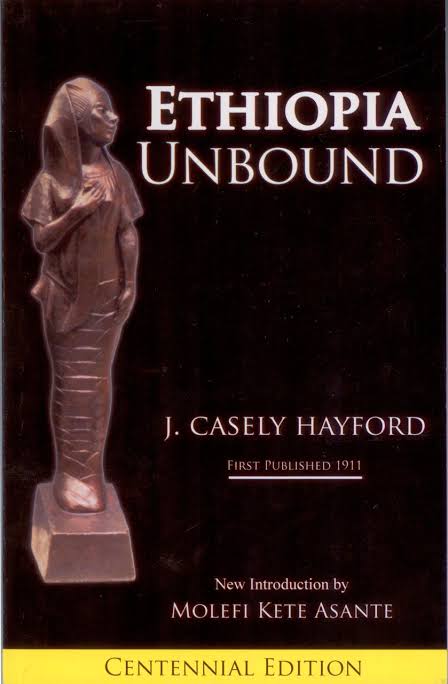
Ethiopia Unbound

This book is extraordinary in its optimism. One could approach the book as a novel, a philosophical treatise, a dialogue of rationalism, an Edwardian romance, or as a meditation on love, self, family, and community. It is all of these and more because it is filled with African as well as Greek myths as reference points and is a sound political tract on the contemporary strivings of the Turks and the Russians as well as African life under British colonial rule. Yet Casely Hayford is certain in the end that there would be victory over the colonial oppression in the Gold Coast and that his people, the Fante, would enjoy their own freedoms and independence as citizens equal to any in the world. For him, this is not just the objective of the Fante, it is it the aim for the entire Ethiopian world, by which he means all of Africa. Rise, you mighty giant! Rise! Ethiopia will soon be unbound! And so it was.
Categories
Guinea Bissau Most Popular

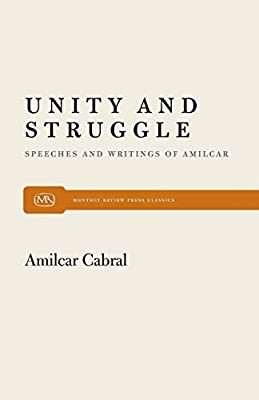
Unity and Struggle

AmÃ?Â-lcar Cabral, born in 1921 in Guinea-Bissau, had his early education in Guinea and did his university studies in Portugal. Cabral found himself active in the nationalist struggle, a political context that enabled him to reflect on several aspects of the armed struggle. He developed his understanding and theories of the national liberation struggle in the political context of militant nationalism; he fought as he wrote incisively about that struggle, and passionately struggled as he wrote. This dialectical experience enriched his theoretical understanding of the aims, goals, strategies and ideologies that informed the nature of political involvement in the movement for national liberation. This new edition of Cabral’s work includes a chapter on ‘Return to the Source’ that emphasises culture as a form of struggle. Cabral’s work remains one of the most influential texts written on the imperatives of rethinking the political, economic and cultural debates on identity, nationality, and the discourses of Africanisation.
Categories
Ghana Most Popular

In My Father’s House

In this vastly important, widely-acclaimed volume, Kwame Anthony Appiah, a Ghanaian philosopher who now teaches at Harvard, explores, in his words, “the possibilities and pitfalls of an African identity in the late twentieth century.” In the process he sheds new light on what it means to be an African-American, on the many preconceptions that have muddled discussions of race, Africa, and Afrocentrism since the end of the nineteenth century, and, in the end, to move beyond the idea of race.
In My Father’s House is especially wide-ranging, covering everything from Pan Africanism, to the works of early African-American intellectuals such as Alexander Crummell and W.E.B. Du Bois, to the ways in which African identity influences African literature. In his discussion of the latter subject, Appiah demonstrates how attempts to construct a uniquely African literature have ignored not only the inescapable influences that centuries of contact with the West have imposed, but also the multicultural nature of Africa itself. Emphasizing this last point is Appiah’s eloquent title essay which offers a fitting finale to the volume. In a moving first-person account of his father’s death and funeral in Ghana, Appiah offers a brilliant metaphor for the tension between Africa’s aspirations to modernity and its desire to draw on its ancient cultural roots.
Categories
Most Popular Nigeria

Male Daughters, Female Husbands

In 1987, more than a decade before the dawn of queer theory, Ifi Amadiume wrote Male Daughters, Female Husbands, to critical acclaim. This compelling and highly original book frees the subject position of ‘husband’ from its affiliation with men, and goes on to do the same for other masculine attributes, dislocating sex, gender and sexual orientation. Boldly arguing that the notion of gender, as constructed in Western feminist discourse, did not exist in Africa before the colonial imposition of a dichotomous understanding of sexual difference, Male Daughters, Female Husbands examines the structures in African society that enabled people to achieve power, showing that roles were not rigidly masculinized nor feminized. At a time when gender and queer theory are viewed by some as being stuck in an identity-politics rut, this outstanding study not only warns against the danger of projecting a very specific, Western notion of difference onto other cultures, but calls us to question the very concept of gender itself.
Categories
Egypt Most Popular

Accumulation On A World Scale

Samir Amin has undertaken an ambitious task: nothing less than an analysis of the process of capital accumulation on a global level. Drawing on a wide range of empirical material from Africa and the Middle East, Amin attempts to demonstrate, through a critique of writings on “underdevelopment,” how accumulation in advanced capitalist countries prevents development, however that may be defined, within the peripheral social formations, usually referred to as “underdeveloped” countries. Samir Amin ranks among those who realize the necessity not merely to comprehend the growing crisis of world capitalism, as it manifests itself within individual nation states, but also at the world level.
Design a site like this with WordPress.com
Get started